
Chinese privilege in Singapore is often the casual assumption that Chinese is the norm, woman says
Merlion Park, Singapore
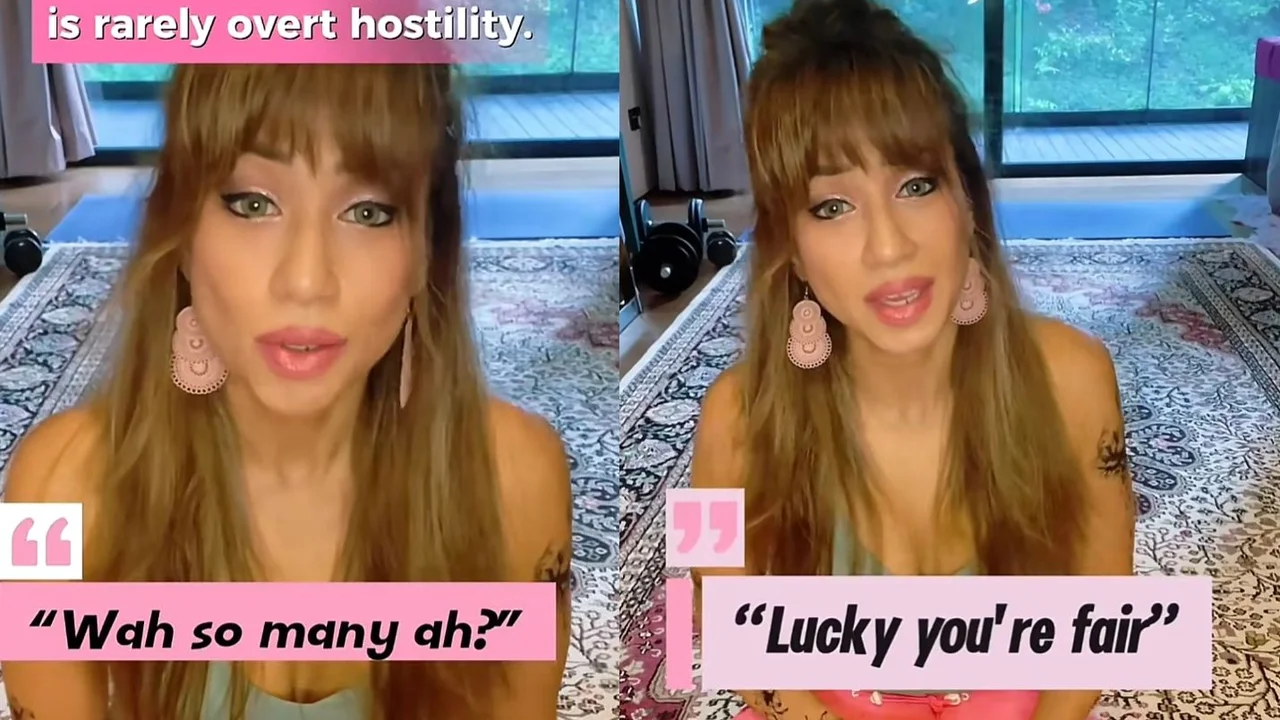
SINGAPORE: In a social media video, a woman talked about the forms in which Chinese privilege in Singapore appears, saying that it doesn’t usually look like overt hostility.
Instead, it often comes in small remarks that people make unconsciously, unaware of their impact.
Lalitha (@fairyfitmama), a mother of two, is a former lawyer and currently a yoga instructor. She’s also half-Indian and is raising two children in a mixed-race family. Her posts are often about racial equality, inclusion, and equal school recognition of minority festivals.
In her video, she talked about how Chinese privilege in Singapore may often be seen in the comfort with which Chinese people make certain comments, “not even realising that they are racist.”
She gave the example of one of the mums from her son’s school who asked if there was an Indian boy in her son’s class.
After Ms Lalitha said yes, the other mum asked how many.
When Ms Lalitha replied that there were a few, her reply was, “Wah, so many ah.”
“As if the presence of more than one Indian class in a child is notable or excessive,” said Ms Lalitha.
The other mum also said that the mother of one of her child’s classmates had “one of those very long unpronounceable Indian names.”
She continued, “As if she couldn’t be expected to remember such a name. She knows that I’m half-Indian. My whole life, the Chinese in Singapore have freely made racist comments about Indians to me. They even say to me, ‘Lucky you’re fair,’ as if that is the greatest of all compliments, to have fair skin.”
Ms Lalitha went on to explain that this is what Chinese privilege in Singapore looks like: having Chinese children in a class is “normal,” while having Indian or Malay children may easily elicit questions of why there are “so many of them.”
In the same way, Chinese names are “normal,” but Indian names are “unpronounceable, as if the problem is with the Indian name instead of her own unfamiliarity or ignorance.”
She asked viewers to imagine if the situation were in Australia, and a white Australian mother talking to another parent sees a Chinese boy in the class. If the mum were to say “so many,” and add that the child’s mother had “one of those unpronounceable Chinese names.”
Newsletter
Get updates straight to your inbox
“How would that make you feel? Would you feel included in that society?” she asked.
“This is what Chinese privilege in Singapore often looks like: the casual assumption that Chinese is the norm that other people are measured against. In hiring, in tenant preferences, in whose names get mangled without apology. It is ordinary here; maybe that is why it is rarely identified or called out when it happens,” Ms Lalitha added.
She also clarified that the woman she talked about is “not a bad person,” but a caring mother who has helped her repeatedly. However, this is exactly the point she’s making: it’s not “bad” people who make casually exclusive remarks; it’s those who have never had to examine their privilege. /TISG
Read also: Woman explains why 'Chinese privilege in Singapore is real’