
From server investigations to new US chip rules: How Singapore got here

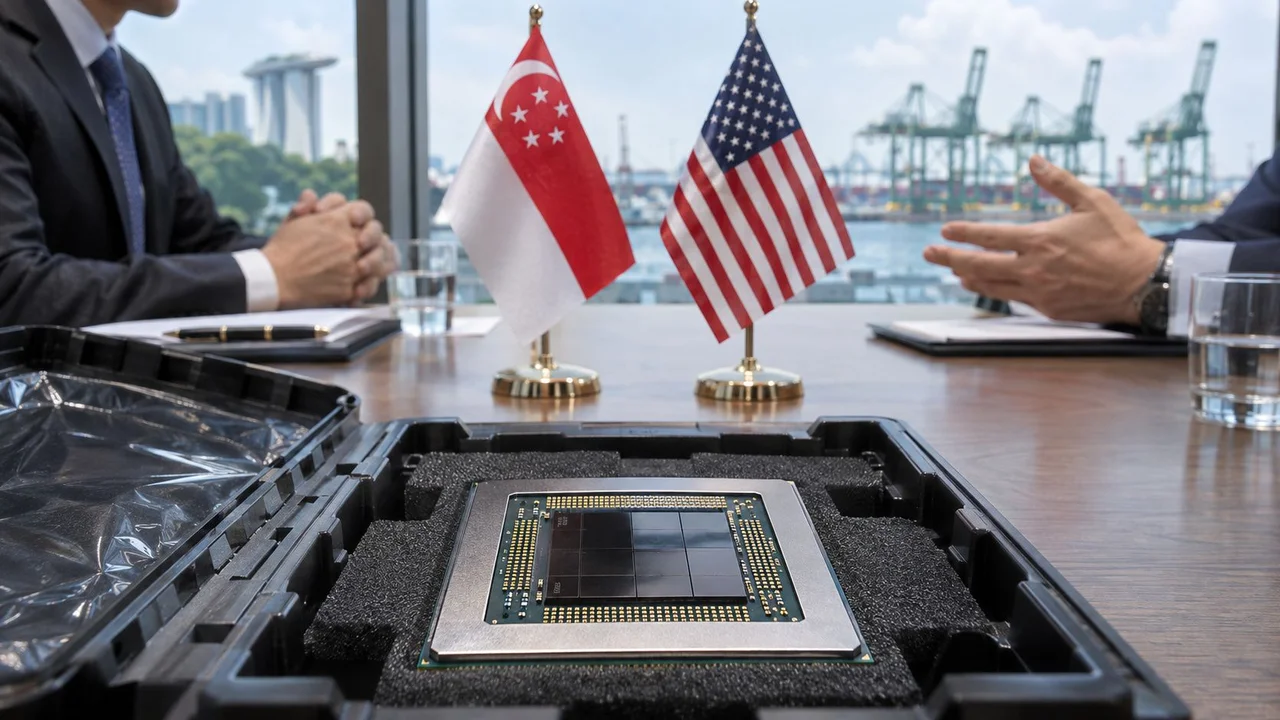
Singapore is working with Washington to keep advanced AI chips available to companies as new US export rules focus on who buys and uses the equipment.
SINGAPORE: Singapore and the United States have agreed to find ways for local businesses to keep using advanced American technology after the US tightened its AI chip rules. Singapore is one of the five countries that need new licenses, which the US says are meant to limit China’s access to advanced chips and their computing power.
These talks follow nearly two years of careful review of who buys and uses advanced computing equipment in Singapore. In February 2025, authorities checked if suppliers received incorrect information about the end users of the servers they sold. A few months later, officials from Singapore and the US inspected how the equipment was used after delivery. These issues are still important as Singapore works to keep advanced chips available for legitimate businesses.
How Singapore reached this point
January 2025 - Singapore was classified as Tier 2 in a previous US chip framework. The Biden administration’s AI Diffusion Rule put Singapore in a group that is subject to tighter limits on access to advanced chips.
February 2025 - Singapore investigates server purchases. Singapore Police and Customs searched 22 locations and arrested nine people. Three men were charged with fraud after claims that suppliers were misled about who would use the servers. Singapore said it started the investigation by itself.
May 2025 - US plans to cancel the previous chip rules. The Trump administration announced it would cancel the AI Diffusion Rule and ordered not to enforce it before it was supposed to take effect. The restrictions announced in November 2026 were part of a different measure.
June 2025 - Singapore and US officials conduct a joint check. Officials visited a Singapore-based company under investigation to verify how it used its equipment after shipment. This visit showed that the two countries had already started working together on inspections before the most recent licensing talks.
November 12, 2026 - Jensen Huang resigns as Nvidia CEO. Huang resigned as people questioned his ties to the leader of a Singapore-based Nvidia customer under investigation. Nvidia later said he returned to the company on Nov 23.
November 16-18, 2026 - US announced tighter rules, and Singapore responds. Washington announced new rules for shipping and transferring advanced chips involving Singapore, Malaysia, Indonesia, Thailand, and Brazil. On November 17, Singapore’s Minister for Digital Development and Information Josephine Teo spoke with US Commerce official Jeffrey Kessler. CNA reported the following day that both sides agreed to follow up on arrangements to keep advanced US technology accessible to legitimate users in Singapore.
November 23, 2026 - US announces a separate trade blacklist action. US announced that it added seven companies to its Entity List, including three that are based in Singapore: Megaspeed International, Apex Enterprise Solutions, and Swiftdata. To be on the Entity List means that special licenses are required before any transactions involving those companies. The rules announced on November 16 apply to certain advanced chip shipments and transfers to Singapore.
What Singapore can check before chips are shipped
The talks can help businesses to work out what they need to do in order to get a US license. The February investigation points to a problem Singapore can address internally. A supplier may well know the name of the company that placed the order, but that tells them very little about who actually controls the company or who will be using the equipment. If the authorities can verify that information before the shipment goes through, they will have a better chance of catching false declarations early.
Maria Monica Wihardja, a fellow at ISEAS–Yusof Ishak Institute, told CNA that the complex nature of data centre ownership can make it hard to know who really controls an operation and who is responsible for the decisions made. Singapore already has information on who owns or controls a company. Authorities could use this information when reviewing high-risk orders. For example, if a newly registered company places a very large order for a high-end server, the authorities could check who controls that company and then ask for documents showing where the servers will be installed and who will use them. This would make it much harder to use a shell company to hide the real buyer.
Newsletter
Get updates straight to your inbox
Why continue to check after delivery
The joint visit in June is an example of how officials can check on equipment after it has been shipped. Singapore Customs already requires end-user statements or certificates for certain strategic-goods permits. For higher-risk shipments, officials can use these documents to confirm that the servers reached the declared site and are being used as claimed.
Even if the servers are located at the stated address, overseas customers can still rent computing power without the chips leaving Singapore. This means data centre operators need to check who is getting access. Singapore could require operators to confirm who controls customers who want large amounts of computing power, even if those customers use a middleman.
Singapore’s talk with Washington can help legitimate businesses plan their next chip orders. If Singapore strengthens its internal checks, it can better support its case for continued access. For sensitive orders, officials should be able to answer three questions: Who bought the servers? Where did they end up? Who gets to use them?