
‘Never promise happiness’: George Yeo explains why Singapore can be wealthy yet unhappy

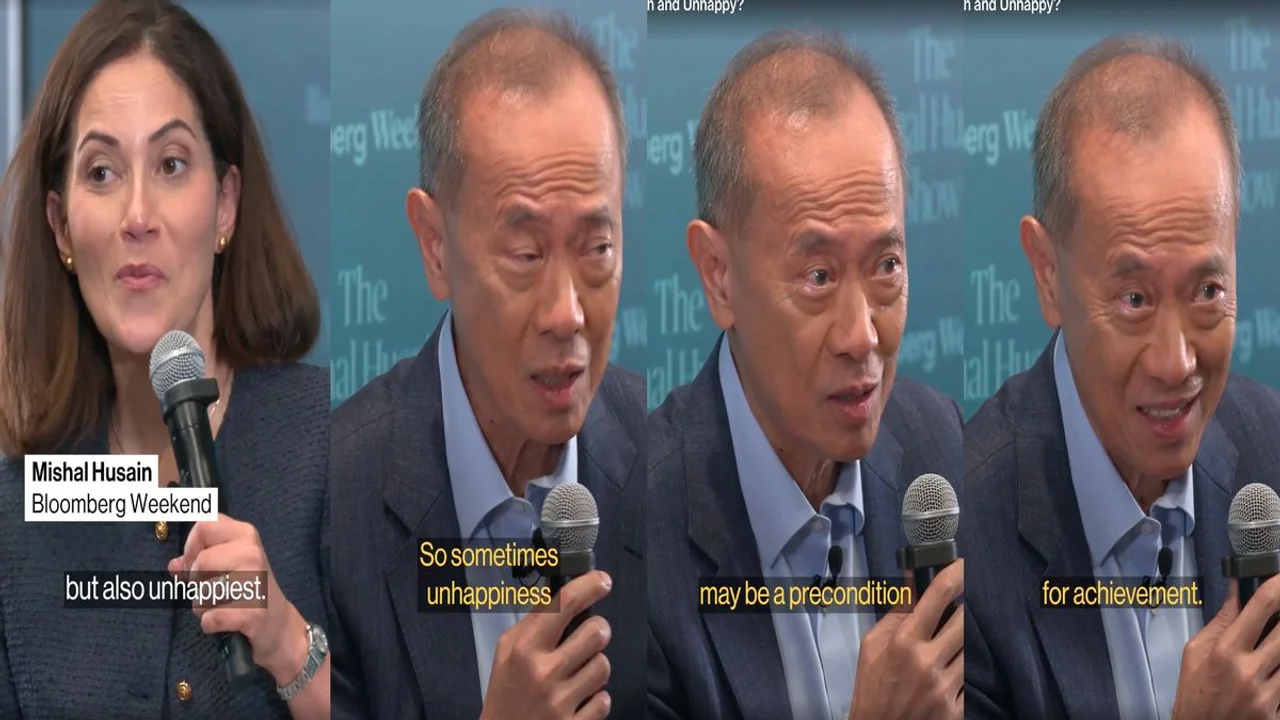
SINGAPORE: It’s easy to assume that success translates to happiness, but what if it’s the opposite? At Bloomberg Weekend’s The Mishal Husain Show in Singapore, British journalist Mishal Husain asked former Minister for Foreign Affairs George Yeo a question from the audience: why is Singapore, which is on the list of the top 20 wealthiest countries, also one of the unhappiest?
Recalling the first prime minister Lee Kuan Yew’s reminder to them, Mr Yeo answered, “I always remember Lee Kuan Yew reminding us: never promise happiness.”
“We can promise economic development, infrastructure, education, whatever. But never promise happiness”, he added.
When asked if he was bothered by it, he brought up that both the Ministry of Trade and Industry (MTI) and the Ministry for Foreign Affairs (MFA), where he had served, had “terrible work-life balance” but had “the highest morale.”
“So sometimes unhappiness may be a precondition for achievement,” he said.
Commenters on Bloomberg’s Instagram and TikTok short videos that went viral but later became unavailable had mixed reactions, with some expressing their own “unhappiness” towards the former minister’s explanation.
One commenter, quoted by Must Share News, said, “Happiness is literally in our national pledge though.” Others, as quoted by Asia One, agreed that the government is instead responsible for providing “the economic and social conditions that allow people the luxury of pursuing their own happiness”.
Newsletter
Get updates straight to your inbox
According to Inc.com, research shows that success doesn’t necessarily lead to happiness, but happiness can help drive success, as positive moods can make people more confident, resilient and motivated to pursue their goals.
So, given that Singapore is one of the world’s wealthiest—and perhaps most successful—countries, does that mean Singaporeans are “happy” after all? /TISG
Read also: No change in happiness: Singapore stands out in latest global report