
Singapore-listed palm oil producer Kencana Agri faces inquiry by Indonesia govt over suspected land burning

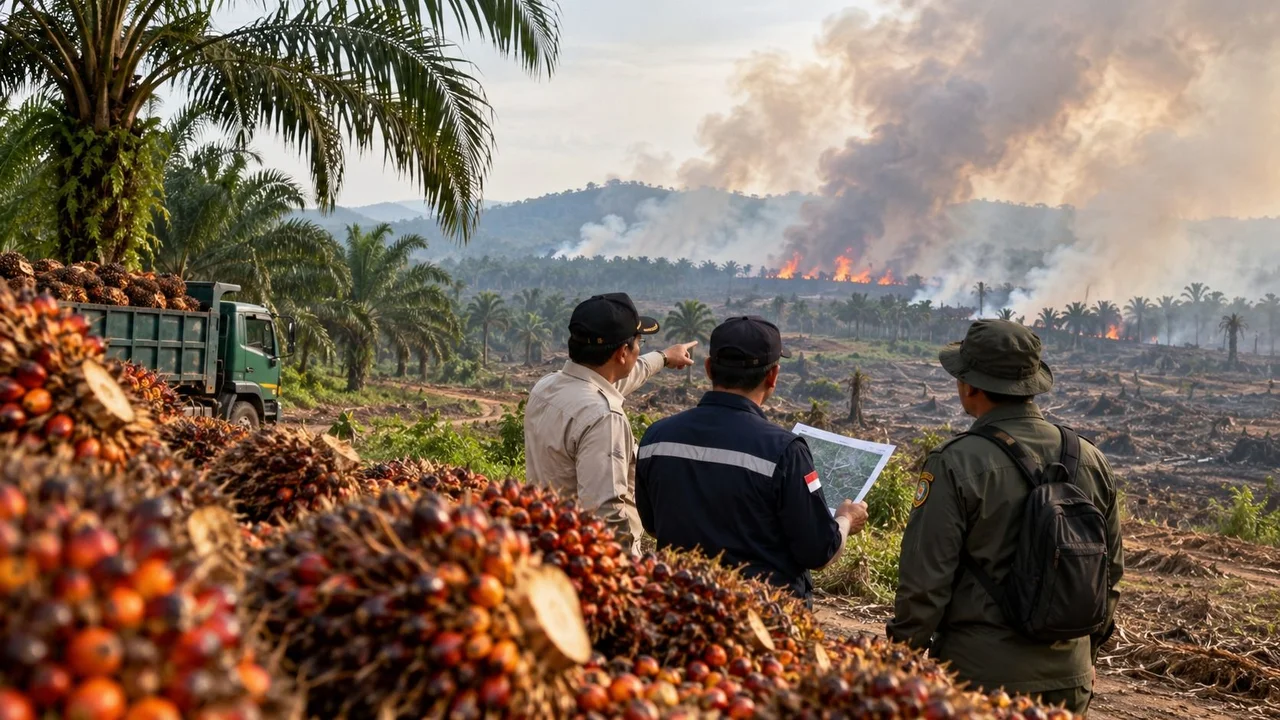
Officials inspect land affected by fires near an oil palm plantation
Summary
Indonesian authorities are investigating a fire at Kencana Agri’s subsidiary in North Kalimantan, suspected to be due to land clearing by burning.
Kencana Agri reported fires affecting about 62 hectares across subsidiary concession areas in North and East Kalimantan, representing less than 0.09 per cent of its planted area.
Singapore will issue preventive measure notices to seven Indonesian companies, requiring firefighting efforts, an end to burning and plans to prevent future fires.
SINGAPORE/INDONESIA: Singapore-listed palm oil producer Kencana Agri is facing an Indonesian inquiry into suspected land clearing by burning, while several other listed firms deny links to the worsening haze. The investigations follow Singapore’s step-up in efforts to identify companies responsible for fires affecting the region.
Kencana Agri had disclosed the preliminary inquiry in response to questions from Singapore Exchange Regulation (SGX RegCo).
Prime Minister Lawrence Wong said Singapore was investigating which companies might be responsible for the forest and peatland fires. He added that Singapore could take action under the Transboundary Haze Pollution Act and explore joint action with other countries, Channel NewsAsia (CNA) reported (Oct 16).
Kencana Agri says fires spread from neighbouring land
Kencana Agri said the inquiry concerns a fire near the boundary between its subsidiary’s land and an adjacent third party’s property in North Kalimantan.
The company said its subsidiary hadn’t cleared or prepared land by burning in the affected area. Investigators inspected the site in September, and the subsidiary supplied the information they requested.
Fires recorded within concession areas operated by its subsidiaries in North and East Kalimantan affected an estimated 62 hectares. That represents less than 0.09 per cent of the group’s total planted area of about 67,862 hectares.
Kencana Agri said its preliminary internal assessment suggested the fires spread from neighbouring areas. Its firefighting teams worked with authorities and local communities to contain them.
The company added that it uses drones, observation towers and monitoring systems to detect fires. The inquiry remains ongoing, and Kencana Agri said it would continue cooperating with investigators.
Other palm oil firms defend their fire policies
Golden Agri-Resources said it had no information indicating that its operations caused or contributed to the recent haze. It has maintained a zero-burning policy since 1997 and a no-peat policy since 2010, including requirements for suppliers.
Wilmar International said its no-burning policy had been in place since 2006. It also said it hadn’t undertaken new oil palm planting on its Indonesian plantations since 2013, with subsequent replanting carried out mechanically.
PT Salim Ivomas Pratama, an Indofood subsidiary, said it uses mechanical land clearing and satellite data to detect potential fires.
First Resources and Bumitama Agri also said some fires had originated outside areas they managed before spreading into their concessions. Bumitama Agri executive chairman and chief executive officer Lim Gunawan Hariyanto said preliminary findings hadn’t established a link between the group’s operations and the fires under investigation.
Newsletter
Get updates straight to your inbox
However, a Greenpeace report published on Oct 5 identified First Resources, Bumitama Agri and First Borneo Plantations among companies associated with plantation concessions contributing to the haze.
Singapore issues preventive notices to seven firms
Minister for Sustainability and the Environment Grace Fu said on Oct 16 that Singapore would issue preventive measure notices to seven Indonesian companies under the Transboundary Haze Pollution Act.
The notices require the firms to deploy firefighting teams, stop or avoid burning on land they own or occupy, and submit action plans to extinguish fires and prevent them from recurring.
The action taken places greater pressure on companies to show how they manage fire risks, even as several plantation groups deny responsibility for the current haze.
Investigations will determine where responsibility lies. For now, the priority is to stop fires from spreading, protect affected communities and prevent another haze episode from crossing national borders.
Read related: Grace Fu: 7 companies in Indonesia responsible for forest fires to be issued with haze prevention notices by Singapore